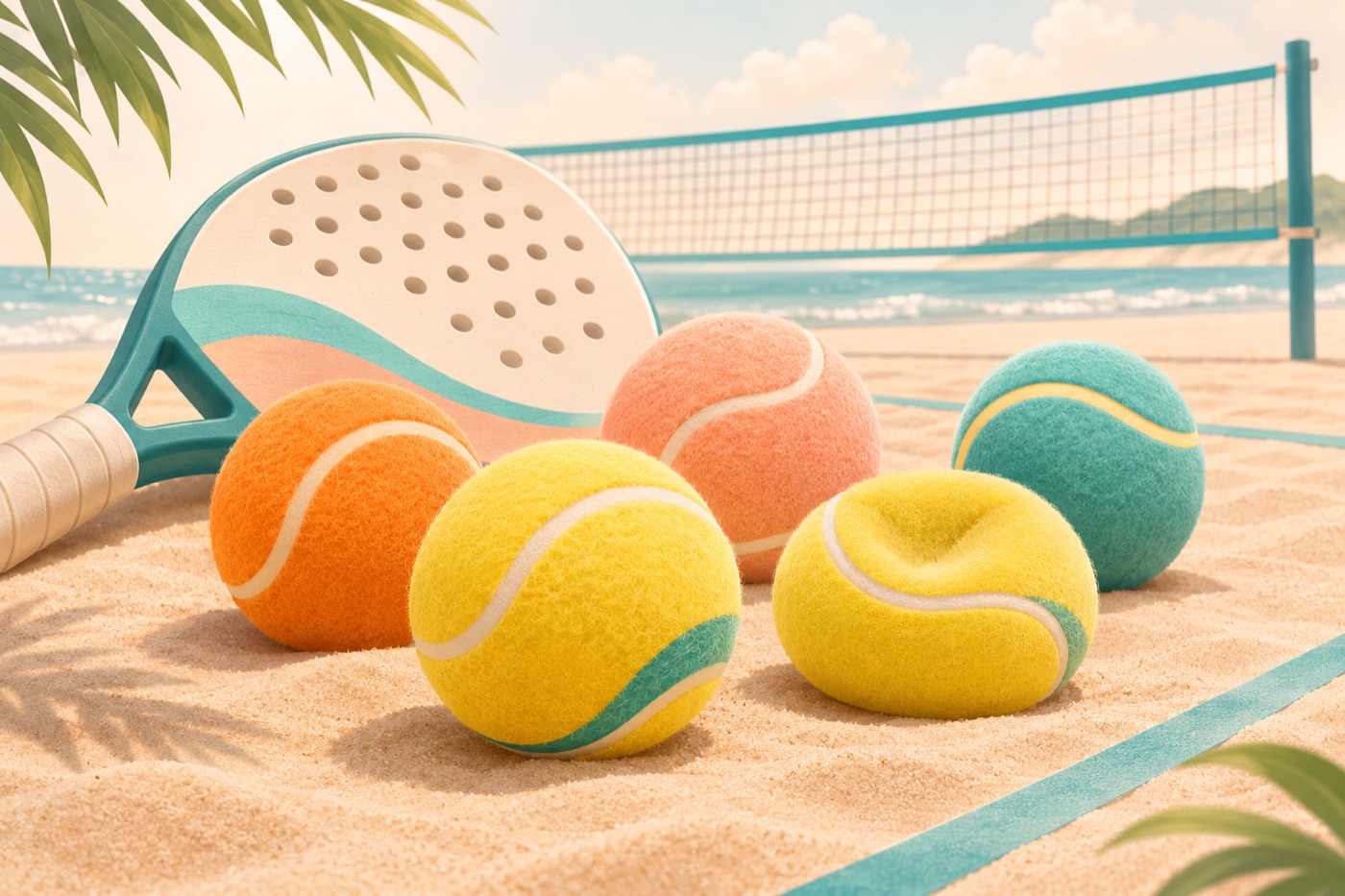
Quicksand balls are made for the sand and play the best. Stage 2 orange balls are a fine, cheaper backup.
Quick picks
Short on time? Here are my favorites at a glance.
Side-by-side comparison
| Quicksand Beach Tennis Balls | 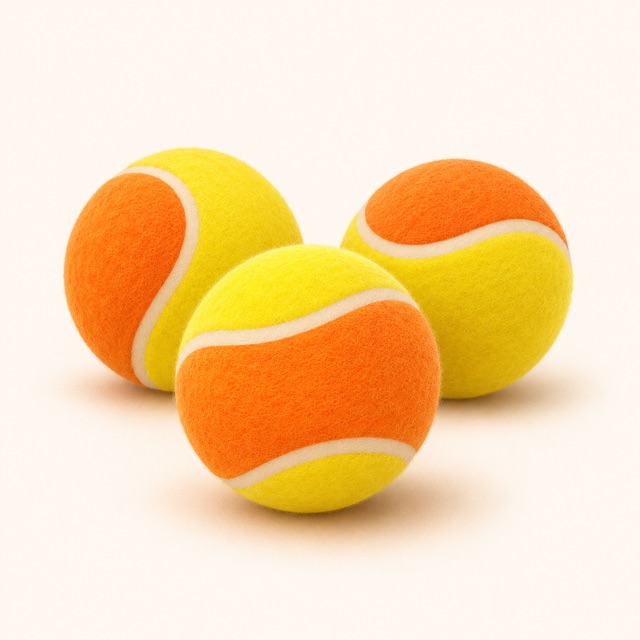 Stage 2 Orange Tennis Balls | 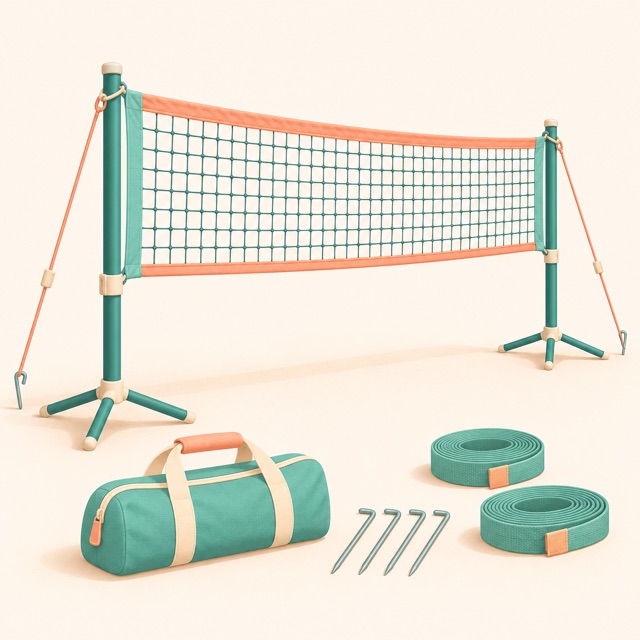 Beach Tennis Net Set | |
|---|---|---|---|
| Award | Best Overall | Best Budget Alternative | Best Net |
| Rating | 4.7 | 4.3 | 4.4 |
| Best for | Regular play and practice | Casual games and beginners | Setting up your own court on the beach |
| Price | $ | $ | $$ |
| Durability | 8.5 | 7.5 | – |
| Bounce | 9.0 | 8.0 | – |
| Feel | 9.0 | 8.0 | – |
| Value | 8.0 | 9.5 | – |
| Check price | Check price | Check price |
Scores are out of 10. The highlighted cell is the best in each row.
 #1
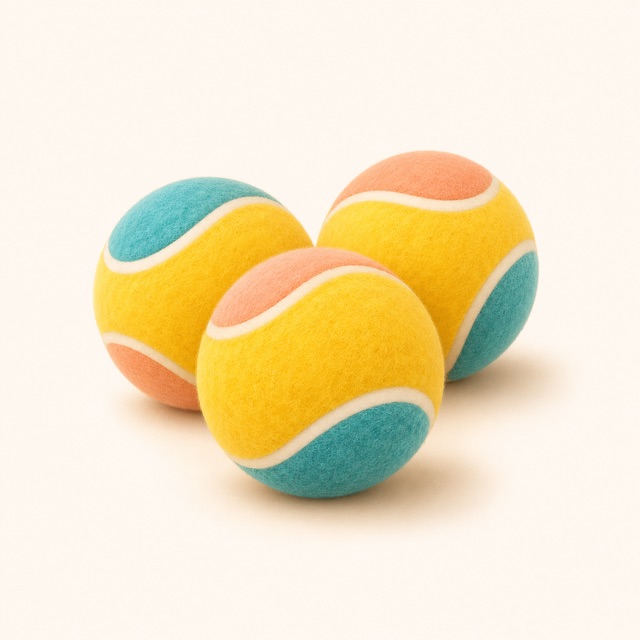
Quicksand Beach Tennis Balls
Best for: Regular play and practice · $
From a beach tennis specialist, these low-pressure balls are made for the slower, controlled game on sand.
What I love
- Made for beach tennis
- Consistent, controllable bounce
- Easy to see
Keep in mind
- Lose pressure over time like all balls
#2 Stage 2 Orange Tennis Balls
Best for: Casual games and beginners · $
Beach tennis balls are based on the low-compression orange Stage 2 ball, so these are an easy, widely available option for casual play.
What I love
- Easy to find
- Affordable in bulk
- Slower, easier rallies
Keep in mind
- Not beach-tennis-specific
#3 Beach Tennis Net Set
Best for: Setting up your own court on the beach · $$
A portable net with poles and boundary lines turns any stretch of sand into a court. It's perfect for beach days with friends.
What I love
- Portable
- Includes boundary lines (most sets)
- Fun for groups
Keep in mind
- Takes a few minutes to set up in wind
Balls are the most overlooked beach tennis gear, and also the one that changes the game the most. The wrong ball turns rallies into a guessing game. The right ball floats just enough to make volleys feel smooth and rallies last. Here’s everything you need to know before you buy.
Why you can’t just use regular tennis balls
Regular tennis balls are pressurized and fast. On the sand, with no bounce and a high net, they fly too quickly and feel too heavy on your racket. Rallies end fast and mistakes pile up.
Beach tennis uses low-pressure balls. They have less air pressure inside, so they:
- Fly slower, giving you time to react at the net.
- Feel softer on the racket and on your arm.
- Make longer rallies, which is exactly what makes the game fun.
Stage 2 orange balls
Most beach tennis is played with “Stage 2” orange balls. These are about 50% slower than a standard tennis ball. You’ll recognize them by their orange or orange-and-yellow color. They’re also used in junior tennis programs, so you can sometimes find them in big packs at a good price.
Some brands make balls specifically for beach tennis. They’re designed for sand, sun and wind, and they’re usually what you’ll see at clinics and tournaments.
What to look for in a beach tennis ball
Speed and pressure
You want a ball that’s officially low-pressure (Stage 2). Anything faster makes the game harder, especially for beginners.
Durability
Sand is abrasive. It wears down the felt, and once the felt goes, the ball flies unpredictably. Beach-specific balls usually hold up better in sand and salt.
Visibility
Orange and yellow balls are easy to see against blue sky and bright sand. That matters more than you’d think when you’re looking up at a lob in the sun.
Pack size
If you play often or with groups, buy bigger packs. Balls disappear into bushes, the ocean and other people’s beach bags faster than you’d expect.
How long do beach tennis balls last?
It depends on how often you play and how hot and sandy it gets. As a rough guide:
- Casual players can often use the same balls for a few weeks.
- Regular players usually notice the balls getting slow and fuzzy-bald after several sessions.
Signs it’s time to replace them:
- The felt looks smooth or thin.
- The ball feels “dead” or noticeably softer when you squeeze it.
- Rallies feel slower and the ball doesn’t come off your racket the same.
How to make your balls last longer
- Keep them in a can or zip bag between sessions so they stay clean and dry.
- Don’t leave them in a hot car. Heat changes the pressure inside.
- Brush off sand before you pack them.
- Rotate new and old balls. Use older balls for warm-ups and newer balls for games.
Do you need a net?
If you play at a public beach court, the net is usually already there. But if you want to play anywhere on the sand, a portable beach tennis net is a game changer. Look for:
- Adjustable height so you can set it to beach tennis height (about 1.70m).
- Boundary lines included, so you don’t have to draw a court in the sand.
- A carry bag that’s easy to bring to the beach.
- Stakes or sand anchors that hold the poles steady in loose sand.
FAQ
What color should beach tennis balls be?
Most are orange or orange-and-yellow. The color isn’t a rule, but it tells you the ball is a slower Stage 2 type.
Can I use pickleballs or padel balls?
No. Pickleballs are plastic with holes, and padel balls are pressurized and fast. Neither works well for beach tennis.
How many balls should I bring?
At least 3 or 4 per court. More is better, because you don’t want to stop every point to chase a ball.
Are kids’ tennis balls the same as beach tennis balls?
Orange Stage 2 balls used in kids’ tennis are the same speed category, so they work well as an affordable option.
My bottom line
Use a real low-pressure ball. It’s the easiest way to make the game more fun right away. Pair your balls with a great racket and the right sun essentials, and you’re ready for a full day on the sand.