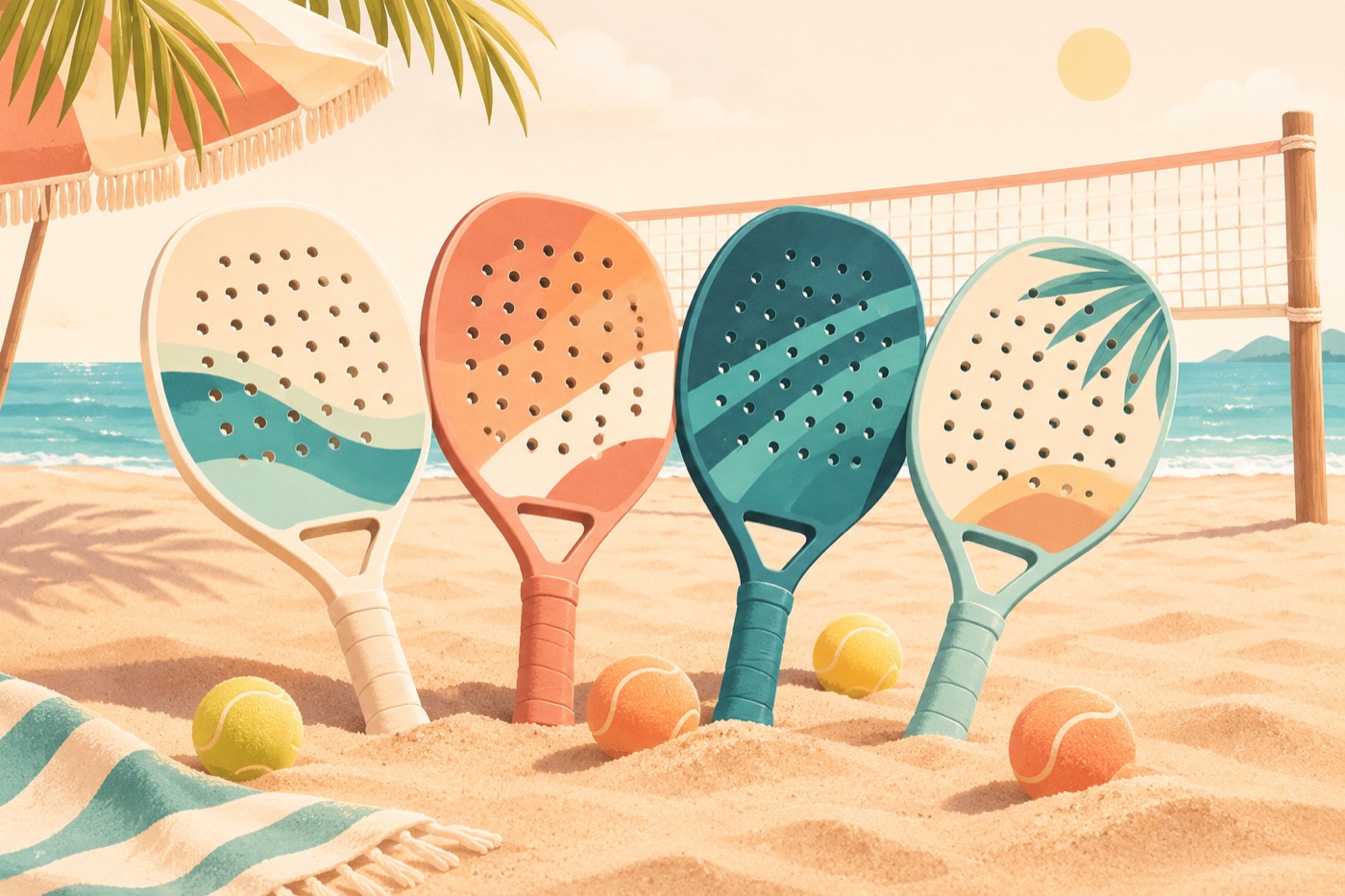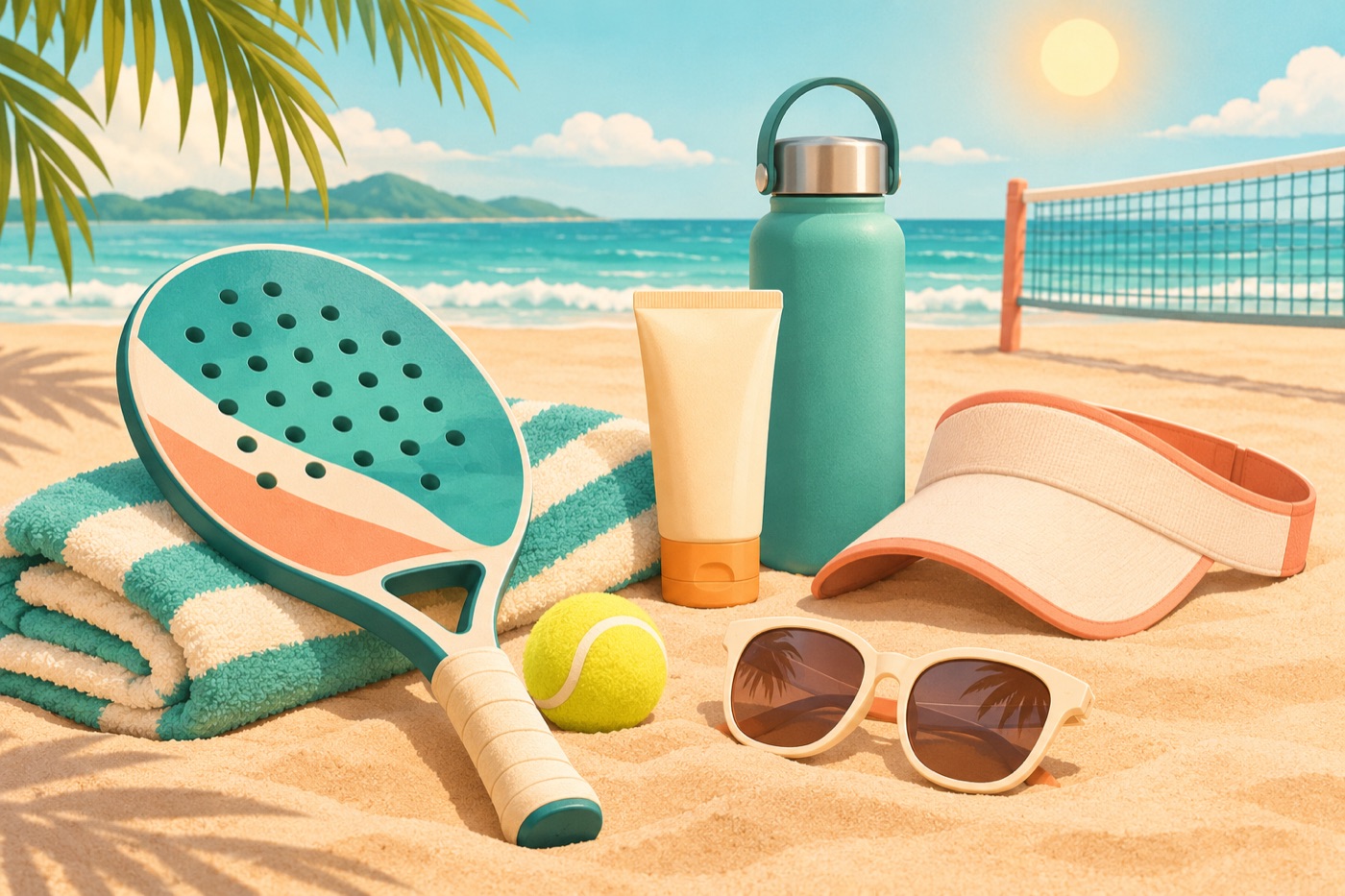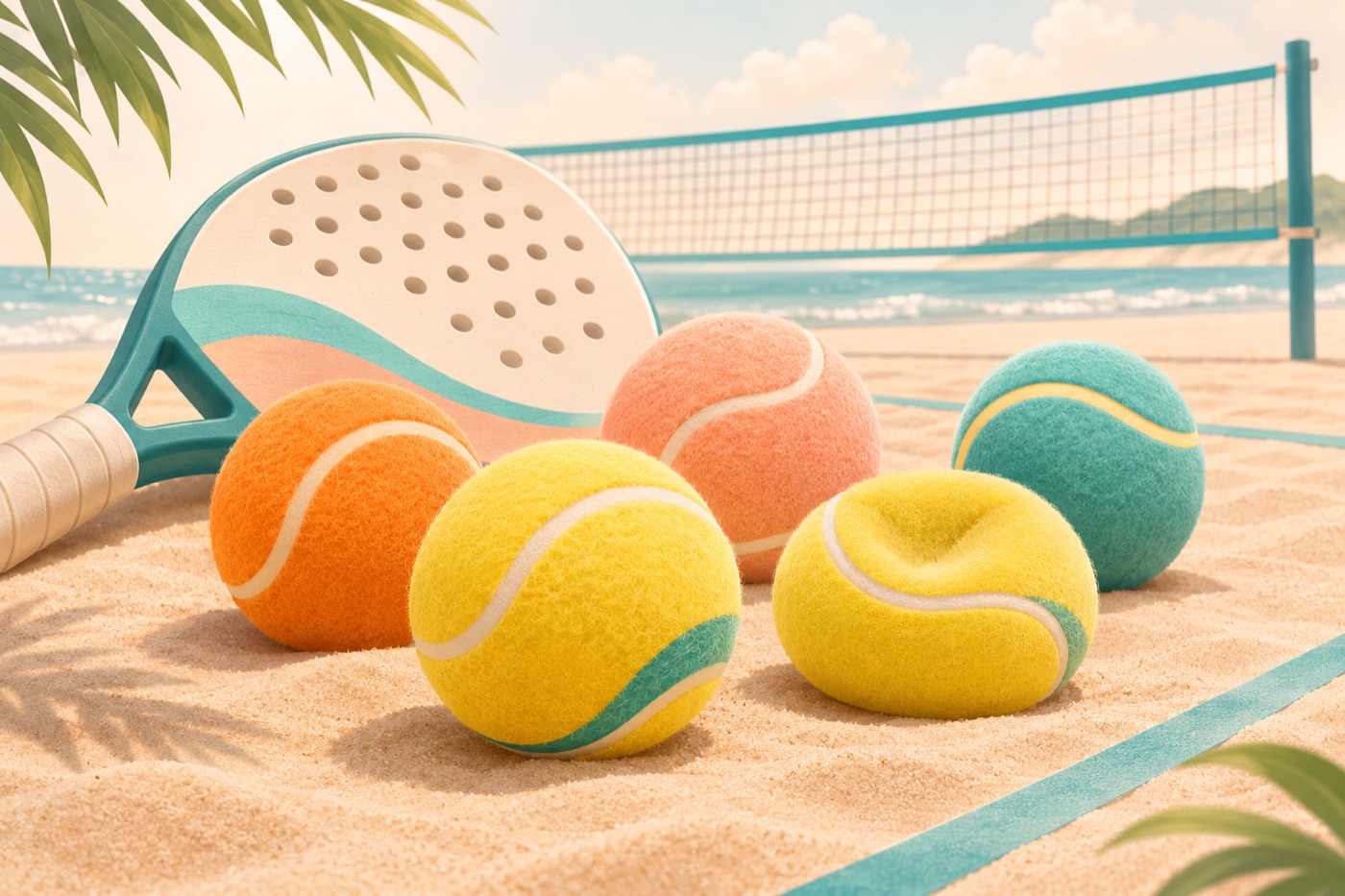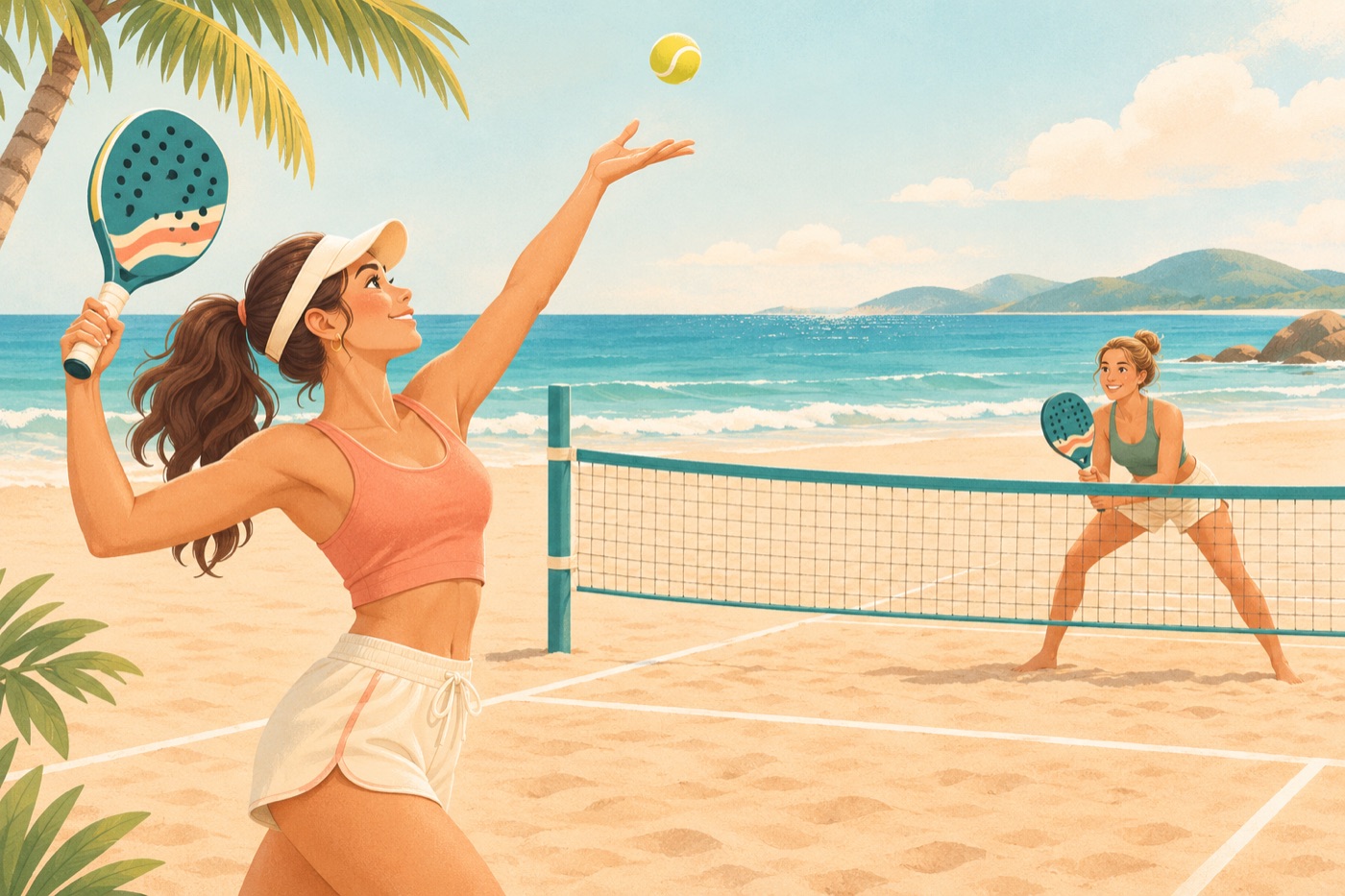
Grab a starter set, a few low-pressure balls and a friend. Learn the no-bounce rule, keep your racket up, and head to one of the Miami Beach courts at 73rd, 7th or 3rd Street. You'll be rallying in your first hour.
Quick picks
Short on time? Here are my favorites at a glance.
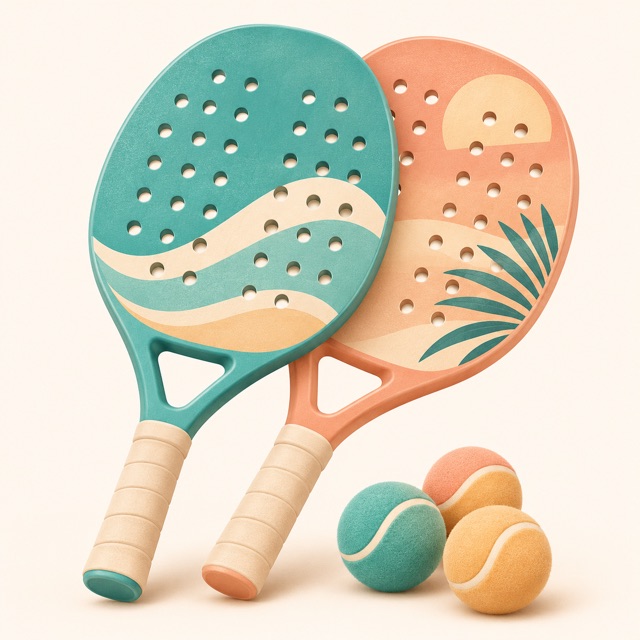
- Best Starter KitBeach Tennis Racket Set (2 Rackets + Balls)Trying the sport with a friend before investingCheck price
-
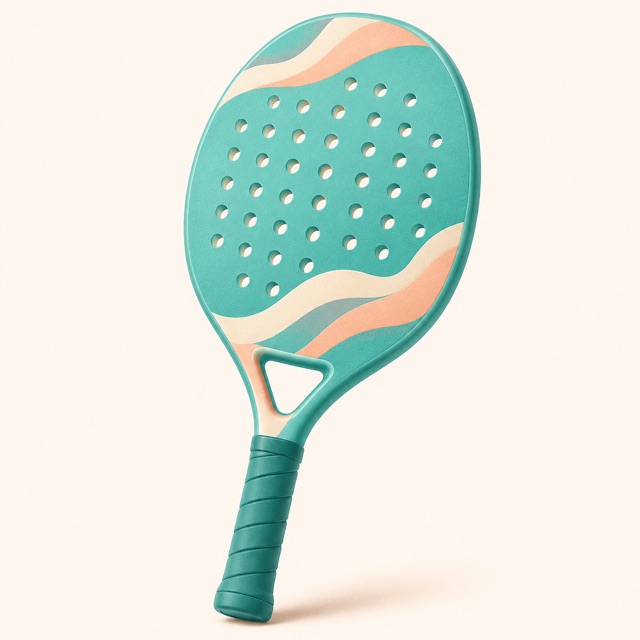 Best First Real RacketDrop Shot Beach Tennis RacketPlayers who want a well-made carbon racket from a top brandCheck price
-
 Check price
-
 Check price
Side-by-side comparison
| Beach Tennis Racket Set (2 Rackets + Balls) | Drop Shot Beach Tennis Racket | Quicksand Beach Tennis Balls | Sand Socks | |
|---|---|---|---|---|
| Award | Best Starter Kit | Best First Real Racket | Best Balls | Best for Hot Sand |
| Rating | 4.1 | 4.7 | 4.7 | 4.3 |
| Best for | Trying the sport with a friend before investing | Players who want a well-made carbon racket from a top brand | Regular play and practice | Protecting feet from hot sand and shells |
| Price | $ | $$$ | $ | $ |
| Power | 6.5 | 8.5 | – | – |
| Control | 7.0 | 9.0 | – | – |
| Comfort | 7.5 | 8.5 | – | – |
| Value | 9.5 | 8.0 | 8.0 | – |
| Durability | – | – | 8.5 | – |
| Bounce | – | – | 9.0 | – |
| Feel | – | – | 9.0 | – |
| Check price | Check price | Check price | Check price |
Scores are out of 10. The highlighted cell is the best in each row.
 #1
Beach Tennis Racket Set (2 Rackets + Balls)
Best for: Trying the sport with a friend before investing · $
If you just want to try beach tennis, a budget set gets two people playing for less than one premium racket. Upgrade once you're hooked (you will be!).
What I love
- Very affordable
- Everything for two players
- Great gift
Keep in mind
- Heavier and less refined
- You'll outgrow it quickly
#2 Drop Shot Beach Tennis Racket
Best for: Players who want a well-made carbon racket from a top brand · $$$
Drop Shot is one of the most respected names in beach tennis, with a range from comfortable all-round rackets to stiff, powerful models for advanced players.
What I love
- Wide range for every level
- Quality carbon construction
- Trusted by competitive players
Keep in mind
- Premium pricing
- So many models it can be confusing; start with an all-round one
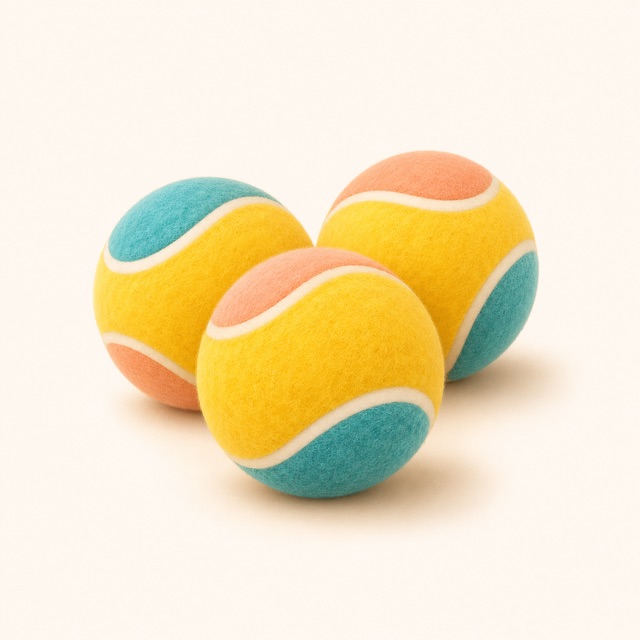
#3 Quicksand Beach Tennis Balls
Best for: Regular play and practice · $
From a beach tennis specialist, these low-pressure balls are made for the slower, controlled game on sand.
What I love
- Made for beach tennis
- Consistent, controllable bounce
- Easy to see
Keep in mind
- Lose pressure over time like all balls
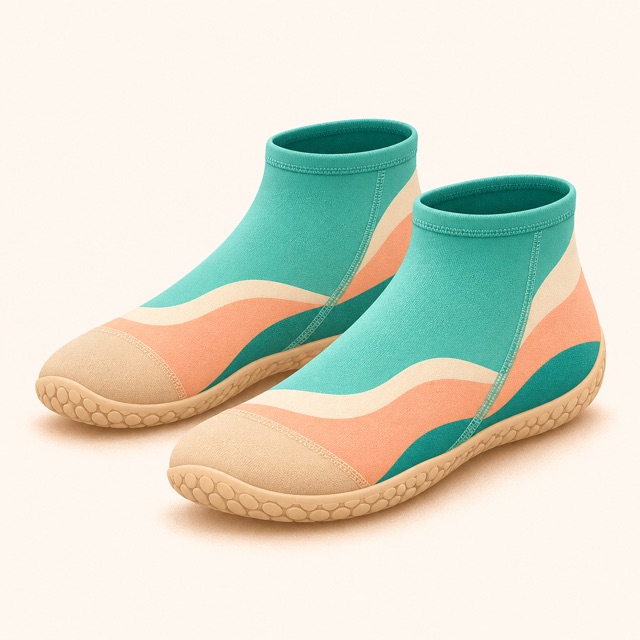
#4 Sand Socks
Best for: Protecting feet from hot sand and shells · $
Sand gets very hot by midday. Sand socks protect your feet while still letting you move naturally.
What I love
- Protect from heat and shells
- Lightweight
- Let you move freely
Keep in mind
- Some players prefer barefoot feel
Beach tennis is my happy place: sun, sand, music and a ball that never stops moving. It looks a little chaotic the first time you see it, but it’s one of the easiest racket sports to pick up. This guide covers everything I wish someone had told me before my first game.
What is beach tennis?
Beach tennis is a fast, social racket sport played on sand, almost always in doubles. It mixes tennis scoring with a beach volleyball-style court, and it has one big rule that changes everything: the ball never bounces. Every shot is hit out of the air.
The sport started on the beaches of Italy and became huge in Brazil, and now it’s growing fast in the US, especially here in Miami.
Why people fall in love with it
- It’s easy to start. No bounce means no tricky footwork on bad bounces, and rallies happen right away.
- It’s a great workout. Moving in sand burns more energy than on a hard court, and it’s gentle on your joints.
- It’s social. Doubles, music and a beach. Enough said.
- Any age, any level. I see kids, tennis players, pickleball players and total beginners on the same courts.
The court and the net
- Size: a doubles court is 16m long and 8m wide (about 52 x 26 feet), the same footprint as a beach volleyball court.
- Net height: about 1.70m (5 ft 7 in), higher than a tennis net. That’s why so many shots are lobs and smashes.
- No service boxes. The whole court on the other side is your target.
- Lines are usually ribbons staked into the sand. A ball that touches the line is in.
The rules in plain English
- No bounces. If the ball touches the sand on your side, you lose the point.
- One serve only. There’s no second serve, so a safe, steady serve is a big advantage.
- Serve from behind the baseline, from anywhere along it. You can serve underhand or overhand.
- Net serves are in play. In most beach tennis rules, if your serve clips the net and lands in, you just keep playing. No “let.”
- One hit per side. You can’t pass the ball to your partner like in volleyball.
- Don’t touch the net with your body or racket during a point.
- Doubles serving: the server rotates each game, like in tennis doubles.
How scoring works
Beach tennis uses tennis scoring with a few shortcuts that make games faster:
- Points: 15, 30, 40, game.
- No-ad scoring: at 40-40 (deuce), the next point wins the game. The receiving team chooses who receives.
- Sets: first to 6 games. At 6-6, you play a tiebreak to 7 points (win by 2).
- Casual games often play one set, or a short “first to 4 games” set when courts are busy.
The equipment
Rackets
Beach tennis rackets are solid, stringless paddles made of carbon or fiberglass with a foam core and small holes. They’re lighter and shorter than a tennis racket. Beginner rackets are softer and more forgiving. Advanced rackets are stiffer and more powerful. See my picks in the best beach tennis rackets.
Balls
Beach tennis uses low-pressure balls, usually the orange “Stage 2” type. They fly slower than regular tennis balls, so rallies last longer. Regular tennis balls are too fast and too heavy for the sand. My favorites are in the best beach tennis balls.
What to wear
- Barefoot or sand socks. Most people play barefoot, but sand socks save your feet on hot afternoons.
- Sunglasses, a visor and sunscreen. You’ll be looking up at lobs into the sun all game.
- Light, quick-dry clothes. Swimwear is totally fine.
The shots you’ll use most
- Serve: start with a simple underhand or a gentle overhead. Consistency wins, because you only get one try.
- Volley: a short punch with your racket out in front. This is most of the game.
- Lob: a high, deep shot over the net players. Great for pushing opponents back.
- Smash: the overhead finisher when someone sends you a short lob. Aim down at their feet.
- Drop shot: a soft touch shot that lands just over the net. It works great when opponents are deep.
- Defensive “save”: when the ball is low, get under it and lift it high and deep to buy time.
Positioning and strategy
- Get to the net. Most points are won close to the net. After you serve, move forward.
- Partners side by side. In doubles, play side by side and cover your half. Don’t both chase the same ball.
- The middle is a weak spot. Aim between your opponents. They’ll hesitate over who takes it.
- Talk! Call “mine,” “yours” and “switch” on lobs.
- Lob, then attack. Push the other team back with a deep lob, then step in for the volley or smash.
Beginner mistakes (I made all of them)
- Racket down. Keep it up in front of your chest. The ball comes fast at the net.
- Swinging like tennis. Big backswings are too slow. Short, compact strokes win.
- Standing flat-footed. Sand is slow. Stay low, on your toes, and start moving early.
- Going for winners on the serve. You only get one serve. Just get it in.
- Forgetting sunscreen. You’ll be out longer than you think.
A quick warm-up before you play
- Jog lightly in the sand for 2 to 3 minutes.
- Do leg swings, arm circles and a few gentle lunges.
- Hit soft volleys with your partner at the net for 5 minutes.
- Practice a few serves and lobs before you start counting points.
Where to play beach tennis in Miami Beach
In Miami Beach, you can play beach tennis at three spots:
- 73rd Street
- 7th Street
- 3rd Street
These are the only beach tennis spots in Miami Beach, so don’t go hunting for a court somewhere else on the sand. Weekends and sunset hours get busy. Go early in the morning for the coolest sand and the best chance at an open court. Bring your own rackets and balls, plus plenty of water.
Beach tennis vs other racket sports
| Beach tennis | Pickleball | Padel | Tennis | |
|---|---|---|---|---|
| Surface | Sand | Hard court | Enclosed court | Hard, clay or grass |
| Bounce? | Never | Yes | Yes (walls too) | Yes |
| Racket | Solid carbon racket | Solid paddle | Perforated paddle | Strung racket |
| Serve | One try | Underhand | Underhand | Two tries |
| Vibe | Beach party | Social club | Fast & tactical | Classic |
Love racket sports? Check out my sister sites for pickleball and ping pong.
FAQ
Is beach tennis hard to learn?
No! Since the ball doesn’t bounce, beginners rally quickly. Most people are having fun in their very first session.
Can I use a regular tennis racket?
Not really. A strung tennis racket is too long and heavy for quick volleys, and regular tennis balls are too fast. A cheap beach tennis starter set is the best way to try it.
Can you play beach tennis one-on-one?
Yes, singles exists on a narrower court, but doubles is much more common, and much more fun for beginners.
Do I need shoes?
Most players go barefoot. If the sand is hot or you have sensitive feet, sand socks are a great middle ground.
Is beach tennis good exercise?
Absolutely. Sand makes every step work harder, so you get a full-body workout that’s kinder to your knees than hard courts.
My bottom line
Get a starter set and some low-pressure balls, bring a friend, and head to the sand. Keep your racket up, stay on your toes and don’t take it too seriously. See you at 73rd, 7th or 3rd Street!